Free As In Spore
How a Two-Thousand-Year-Old Mold Exposed the Distance Between Knowledge and Value in Specialty Coffee
On October 23, 2021, Christopher Feran published everything. The fermentation protocols, the spore ratios — one gram of MSCO-11 per kilogram of cherry — the temperature windows, the roasting profiles, the varietal selection, the documentation of every failed batch that preceded the viable ones. He posted it to his personal site, not behind a paywall or an NDA or even a Substack, in the same week that Kaapo Paavolainen used the resulting coffee in his World Barista Championship routine in Milan. The Finnish barista didn't place in the top six. The blog post would prove more consequential than the competition.
What Feran published was a method for applying *Aspergillus oryzae* — the filamentous mold responsible for sake, soy sauce, miso, and roughly two millennia of East Asian culinary infrastructure — to coffee cherries during post-harvest processing. He called it the Koji Supernatural Process. The name was aspirational. The documentation was forensic. Every parameter disclosed, every variable annotated, in the particular style of a person who has decided that the value of what he knows increases by giving it away.
This was, in the language of a different industry entirely, an open-source commit to a problem nobody had framed as one: that conventional coffee fermentation accesses only about 70% of the sugars available in a cherry's mucilage. Koji's amylase enzymes reach the rest — breaking polysaccharides into fermentable sugars, cleaving proteins into amino acids, generating the glutamic acid that makes dashi taste like dashi. The mold does what yeast and bacteria structurally cannot. Feran knew this because Jeremy Umansky, a chef at a Cleveland deli called Larder, had written a book about it.
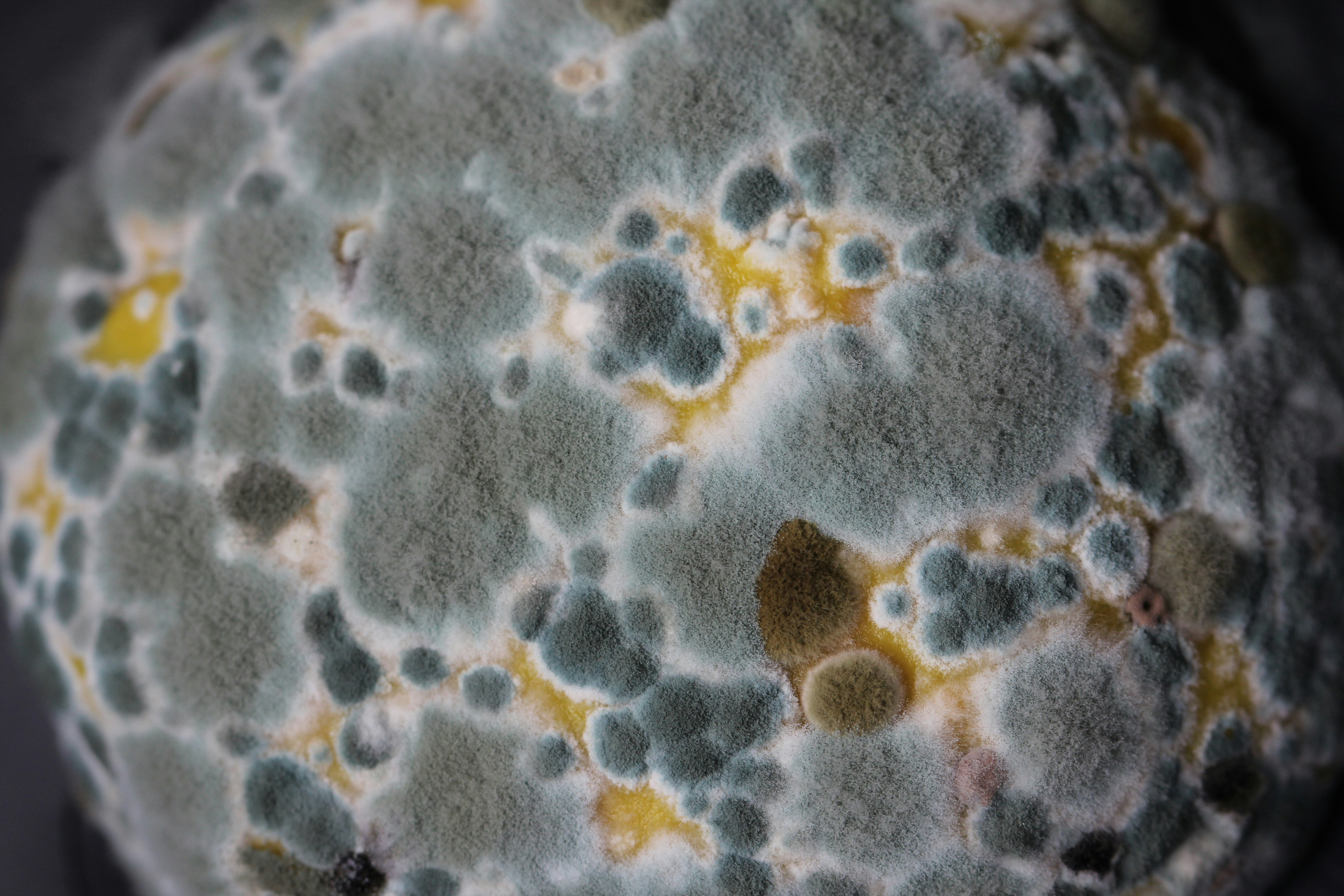
The book was *Koji Alchemy*, published in 2020 with a foreword by Sandor Ellix Katz, the man who had essentially single-handedly mainstreamed the idea that controlled rot is a legitimate culinary practice. Feran and Umansky knew each other from Cleveland's food scene — a city whose culinary ambitions have always exceeded its name recognition, which is sort of Cleveland's whole thing. Feran was simultaneously connected to Koichi Higuchi, whose family's Osaka-based company, Higuchi Matsunosuke Shoten, had been producing koji spore starters for over six hundred years. The third collaborator was Paavolainen, the 2020 and 2021 Finnish Barista Champion, looking for a novel processing method for his WBC routine. Between them — a deli chef, a spore company sixth-generation deep in the *moyashi* trade, a Nordic competition barista, and a Sprudge Award-winning coffee director — they assembled the kind of improbable supply chain that only exists when people who ferment things start talking to other people who ferment things.
They brought the idea to El Vergel Estate in Tolima, Colombia. Elias Bayter Montenegro ran a microbiology lab there, on what had been his family's avocado farm until they pivoted to coffee around 2010 — a transition that, in retrospect, positioned them perfectly for the kind of processing experimentation that the specialty market was beginning to reward. The first trials applied spores directly to green beans. The results tasted like miso. Not good miso, either — the kind of full-blast umami that overwhelms rather than complements. The second trials applied spores to whole cherries, mucilage as substrate, aerobic fermentation at 25 to 30 degrees Celsius, white mycelium covering more than half the cherry surface within 36 hours. The results tasted like tropical fruit, cherry, black tea, and something nobody could quite name but that multiple cuppers described, with unsettling consistency, as "creamy."
Feran published all of that, too. The failures and the breakthroughs alike. This was, by specialty coffee's standards, basically unprecedented. Processing innovations in this industry tend to travel through consulting relationships, farm visits, and the kind of whispered exchanges that happen at origin trips and trade shows — knowledge as social currency, hoarded precisely because it confers advantage. Feran treated the information like a recipe you'd email to a friend. Except the friend was anyone with a browser.
—
To understand what Feran gave away for free, you have to understand what *Aspergillus oryzae* actually is — which requires understanding what it used to be.
Genomic comparison reveals that *A. oryzae* is 99.5% identical in coding regions to *Aspergillus flavus*, one of the most dangerous food-contaminating molds on Earth, a prolific producer of aflatoxins — the carcinogenic compounds that make food recalls happen. The difference, the 0.5% that separates pantry staple from biohazard, lies in large-scale deletions in the aflatoxin biosynthesis gene cluster, accumulated over roughly three thousand years of human selection. It is domestication in the most literal biological sense: the same evolutionary pressure that turned wolves into retrievers turned a toxin-producing pathogen into the enzymatic engine behind half of Japan's culinary identity. The organism secretes over 30 types of enzymes. Its hyphae are, functionally, a biochemical platform.
The Chinese were fermenting grain with mold-based cultures at least two millennia ago. The technology migrated to Japan — during the Yayoi or Kofun period, depending on which archaeologist you trust — and the earliest Japanese written reference appears in the *Harimanokuni Fudoki*, an eighth-century geographic chronicle that describes moldy cooked rice being repurposed for sake production. By the Muromachi period, commercial spore starters were a manufactured commodity. By the Edo period, koji-derived foods had penetrated every level of society. In 2006, Professor Eiji Ichishima of Tohoku University proposed *A. oryzae* as Japan's *kokkin* — national fungus — and the Brewing Society of Japan formally adopted the designation, calling it "a valuable asset carefully nurtured and used by our ancestors." The FDA classifies it as GRAS. Biosafety Level 1. The same risk category as baker's yeast. Try telling that to someone you've just informed that their coffee was processed with mold. Consumer perception — the instinctive recoil at the word *fungus* applied to something you put in your mouth every morning — remains the technology's most persistent barrier, and also its most ironic one, given that the same organism is responsible for soy sauce, a condiment that roughly a third of the planet uses without existential hesitation.
The industrial ecosystem sustaining it is vanishingly fragile. In 1949, 43 companies belonged to Japan's National Koji Starter Association. Today, twelve remain. Six sell nationwide. These family-operated *moyashi* houses guard proprietary strain libraries cultivated across centuries — living archives of microbial domestication, passed down like heirloom seed stock, except the libraries cannot be replicated from scratch and the stakes are correspondingly existential. Among them: Higuchi Matsunosuke Shoten of Osaka, whose spores — evolved over six hundred years for sake and miso production, never once intended for coffee — would end up on Colombian cherries because of a personal network that ran through a Cleveland delicatessen.
—
The open-source protocol produced, as open-source protocols sometimes do, a luxury good.
Onyx Coffee Lab in Arkansas priced its first koji allocation at $75 for ten ounces — roughly $120 per pound, or about ten times what high-quality specialty coffee typically commands. It sold out in hours. The speed of the sellout became, itself, a piece of the mythology — proof of concept and proof of cachet simultaneously, the kind of scarcity event that crypto drops and Supreme releases had already normalized in adjacent consumer cultures. Manhattan Coffee Roasters in Rotterdam moved a hundred kilos in 72 hours. Luminous Coffee, co-founded by Mason Salisbury in the space between Las Vegas and Brooklyn — the kind of bicoastal arrangement that specialty coffee increasingly resembles as an industry — offered 200-gram bags at $30. Kima Coffee in Málaga, named Spain's best cafe in 2024, stocked it. So did Sweven in Bristol, The Gentlemen Baristas in London, Hatch in Ontario. The geography of early adoption mapped precisely onto the geography of cultural capital and expendable income.
None of this required secrecy. Anyone with internet access, a supply of koji spores, and freshly harvested coffee cherries could replicate the process — Feran had designed for exactly this. The protocol was not a patent. It was, in the framing he preferred, a gift. But the gift economy — Marcel Mauss could have told you this in 1925 — does not eliminate hierarchy. It reorganizes hierarchy around reputation, access, and the social capacity to reciprocate. The knowledge was free. The relationships that contextualized it were not. The brand that marketed it was not. The roasting infrastructure was not.
The economics at origin tell a quieter story. According to Elias Bayter Montenegro, roasters pay between 10% and 15% more for koji-processed lots compared to the same coffee processed conventionally. The cupping improvement — moving an 81-point coffee to 83.5 or 84 on the SCA scale — represents a grade change from "good" to "very good" that unlocks premium pricing tiers. But the distance between a 15% farmgate premium and a $120-per-pound retail price is the distance that has always defined coffee's value chain. Koji did not create that gap. It made it — for anyone paying attention — almost unbearably legible.
—
Koji's arrival coincided with, and in certain industry rooms accelerated, a schism over whether co-fermented coffees should exist at all.
The 2024 Best of Panama competition provided the flashpoint. Four coffees were disqualified. The Specialty Coffee Association of Panama released a statement denouncing "the use of co-fermentation and infusions," calling the terminology "deceptive" and deployed "to mislead buyers." Wilmer Tedman called for a separate category for altered coffees — a quarantine, basically — "to preserve the integrity of genuine Specialty Coffee." The rationale invoked food safety, terroir authenticity, and buyer trust, in that order. The subtext was economic, and not particularly subtle about it.
The SCA itself took the opposite position, updating 2024 World Barista Championship rules to permit co-fermented coffees processed before drying. The distinction matters for koji: because the mold is applied during cherry processing and dies during drying, no living *A. oryzae* remains on the finished bean. Koji coffee is, by rule, a co-ferment. It is also, by the time it reaches a grinder, dead.
Karl Wienhold, a PhD candidate at the University of Lisbon, articulated the logical problem with the precision of someone whose entire professional training involves articulating logical problems: if yeast inoculation and controlled fermentation are accepted — and they are, universally — then the exclusion of koji applies a double standard whose only consistent logic is precedent. Things that have always been done are traditional. Things that haven't are adulteration. This is not a scientific distinction. It is a cultural one wearing a lab coat.
Alberto Berchmans Perangin Angin, General Manager of Opal Coffee Indonesia, offered the counterposition with blunt clarity: infused coffee is "a derivative product" threatening "originality and authenticity." The word *authenticity* does remarkable work in that sentence — defining which traditions count as tradition and which count as interference, as though a two-thousand-year-old fermentation technology introduced to a five-hundred-year-old commodity crop represents a disruption of the natural order rather than a continuation of it.
Strip the philosophical language away and the debate reveals a structural conflict — terroir as a form of incumbency protection. Estates in Panama's Boquete, Ethiopia's Yirgacheffe, Colombia's Huila benefit from a valuation system built on "natural expression" of geography. Their altitude, their soil, their microclimate — these are competitive advantages that no processing innovation can replicate elsewhere. Producers in less celebrated origins, the ones for whom an 81-point coffee is the ceiling rather than the floor, gain more from techniques like koji that elevate cup quality independent of location. The Best of Panama ban on co-fermented coffees, whatever its stated rationale, functionally protects geographic incumbents. That this aligns neatly with the interests of the most expensive lots at auction is, depending on your disposition, coincidental or clarifying.
—
The cost problem with koji coffee was never the method. It was the mail.
Shipping 350 grams of koji starter from Osaka to Colombia costs approximately $250 — enough to process roughly 70 kilograms of finished coffee. The spores are not expensive; the intercontinental logistics of shipping a living biological culture in temperature-controlled packaging from one hemisphere to another is. This is precisely the kind of supply chain friction that favors well-capitalized operations and punishes the smallholder farmers who are, rhetorically at least, supposed to benefit most.
El Vergel addressed this with an adaptation borrowed from *Koji Alchemy*: cultivate the spores on partially steamed rice for three to four days, harvest the resulting rice koji, dry it, grind it to powder. From 30 grams of commercial starter, this method produces approximately 240 kilograms of usable inoculant — an amplification factor that effectively collapses the recurring import cost to near zero. The technique is, functionally, a low-tech bioreactor. The rice is a growth medium. The mold colonizes it. The colonized rice becomes the next generation of starter. Feran published the method. Of course he did.
The accessibility argument crystallizes here. Koji coffee, in its rice koji form, requires: a clean fermentation space, containers no more than five centimeters deep, a thermometer, and one initial order of spores. No tanks. No pumps. No CO2 injection. No thermal shock chambers. For an industry in which 44% of smallholder farmers live in poverty and 22% in extreme poverty — Enveritas numbers that circulate so widely in the discourse they've become a kind of ambient statistic, simultaneously motivating and inert — a processing upgrade with near-zero capital requirements has obvious appeal.
Feran himself, though, has been his own innovation's most articulate skeptic. In the same published repository that made koji coffee globally replicable, he wrote that experimental processing "won't solve coffee industry poverty," that systemic change requires confronting colonial trade structures rather than producing better-tasting beans. Richard Stallman drew an analogous distinction decades ago in a different context: free as in speech, not as in beer. The protocol is free. The spores are cheap. The knowledge has been published with a generosity genuinely unusual in specialty coffee, an industry where processing innovations are routinely guarded as consulting revenue streams or competition secrets. But the structural conditions that determine who captures value — proximity to consumers, brand equity, roasting infrastructure, marketing fluency, access to capital — remain untouched by the generosity of the method. Koji coffee is an open-source solution to a problem that was never primarily technical.
—
What makes koji coffee culturally resonant is not the flavor profile, though the flavor profile is by all accounts arresting. It is the provenance of the idea.
Koji coffee did not emerge from agricultural research. It did not come from a coffee science program or an industry R&D lab or a government extension service. It came from the culinary fermentation movement — from René Redzepi and David Zilber's *Noma Guide to Fermentation*, from the Nordic Food Lab's experiments on a houseboat in Christianshavn, from Katz's *Art of Fermentation*, from a Cleveland chef who recognized in koji a universal enzyme platform and wrote a book making it accessible to anyone willing to inoculate rice. The innovation traveled from restaurant kitchen to competition stage to coffee farm, reversing the conventional direction of agricultural technology transfer. It is the kind of cross-disciplinary migration that happens when cultural movements overlap — the fermentation revival of the 2010s meeting the processing experimentalism of third-wave coffee — and the result looks less like a discovery than a collision.
The pipeline has a legible genealogy. Redzepi and Zilber publish *The Noma Guide* in 2018, positioning koji at the center of New Nordic cuisine — bee pollen garum, roasted barley koji, the kind of controlled decomposition that earns Michelin stars when performed in Copenhagen and health code violations when performed elsewhere. Umansky and Rich Shih publish *Koji Alchemy* in 2020, systematizing Western applications far beyond Japanese tradition. Feran reads both books, knows Umansky personally, has a preexisting relationship with the Higuchi family. Paavolainen reads both books and needs a competitive advantage for Milan. The Bayters at El Vergel have a microbiology lab and a tolerance for failure. The innovation is not any single node in this network. It is the network itself.
SOI, a Tokyo-based fermentation technology company, has since positioned itself as a consulting firm for koji applications beyond traditional food, preparing a bilingual platform for broader knowledge dissemination. The trajectory is clear enough: koji is migrating from artisanal craft to advisory service, from published protocol to billable expertise. The knowledge remains free in principle. The interpretation of it — the application, the optimization, the contextualization for specific crops and climates and buyer expectations — is where value quietly reconstitutes itself. This is, if you're being generous, how expertise works. If you're being less generous, it's how the gift gets repackaged as a service.
Granja Paraiso 92, in Piendamó, Cauca — Wilton Benitez's operation at 1,950 meters on volcanic soil near Puracé — has emerged as the second major koji producer, working with Striped Bourbon, Geisha, Caturra, and Papayo varietals. Farms in Guatemala, Costa Rica, Thailand, Vietnam, Brazil, and Indonesia have followed. The map of adoption keeps growing. Whether it grows fast enough, or equitably enough, to validate the democratization narrative remains the open question that nobody involved seems fully comfortable answering.
—
Isis Couto of Forest Coffee, El Vergel's wholesale platform, offered the necessary proportion: co-fermented coffees are "a long-term niche, not the future of all Colombian coffee. Very small volumes compared to the washed Colombian regionals." Experimental processes represent less than 1% of global supply. Koji is a fraction of that fraction — a micro-niche within a micro-niche, commanding prices that reflect scarcity and novelty in roughly equal measure.
And yet the protocol is online. The rice koji method is documented. The spore libraries survive in six Japanese family businesses, available to anyone who can navigate an international shipping form. The enzymatic mechanism is understood, the cupping data is public, and the 30% sugar gap that koji revealed — the polysaccharides that yeast and bacteria leave untouched in every conventionally fermented coffee on Earth — is a finding that invites not just replication but improvement. Purpose-built enzyme cocktails. Precision fermentation. Engineered microbial cultures designed for coffee the way *A. oryzae* was designed, inadvertently, for sake. The mold as transitional technology between artisanal intuition and industrial biology.
The coffee will continue to retail at $75 a bag where it is sold by people who know how to sell it, and will continue to improve cupping scores by a point and a half where it is produced by people who know how to produce it, and the distance between those two facts will continue to be the story that nobody — not the open-source advocate, not the luxury roaster, not the smallholder farmer weighing whether a 15% premium justifies the learning curve — has figured out how to publish away.
Feran made the method free. The method was never the scarce resource.