Fermentation Memory
Colombia's Young Producers Are Keeping Something Alive That Science Hasn't Named Yet
Jhoan Vergara left high school at fifteen. Not to work the farm — to study microbiology. SENA, Colombia's national vocational institute, operates the way community colleges do in the United States — modestly funded, socially essential, invisible to anyone who has never needed one. Vergara learned enough there to recognize that the liquid pooling at the bottom of his father's fermentation tanks was not waste. It was a starter culture.
His parents — Edilberto Vergara and Nubia Ayure — founded Finca Las Flores in Huila in 1990, at 1,780 meters above sea level. Conventional washed coffee, the Federación Nacional de Cafeteros way, which is to say: reliable, consistent, and increasingly incapable of covering the cost of production. Over the past decades, traditional washed Colombian coffees have not been covering production costs. For many rural families this became a direct cause of poverty. Jhoan came back from SENA with ideas that would have been unintelligible to his parents' generation. He partnered with a microbiology lab in Pitalito — separating microorganisms from each variety of coffee cherry to reproduce them — and started saving the liquid his family had been pouring out for thirty years.
The liquid has a name. In winemaking, *mosto* is grape juice before it becomes wine — raw, sweet, pre-transformation. In Colombian specialty coffee, where the spelling drifts between *mossto* and *mosto* the way spellings do when a technique outpaces its documentation, it means something more precise. Mossto is the juice extracted approximately 72 hours into the primary fermentation of whole coffee cherries. By hour 72, it is no longer juice. Lactic acid bacteria and yeasts in active exponential growth. Organic acids at a pH between 3.5 and 4.0. Partially metabolized sugars. Metabolic intermediates that will direct flavor compound production in whatever they inoculate next.
When you add this liquid to a fresh batch of cherries, you are doing something bakers have been doing for millennia. You are backslopping.
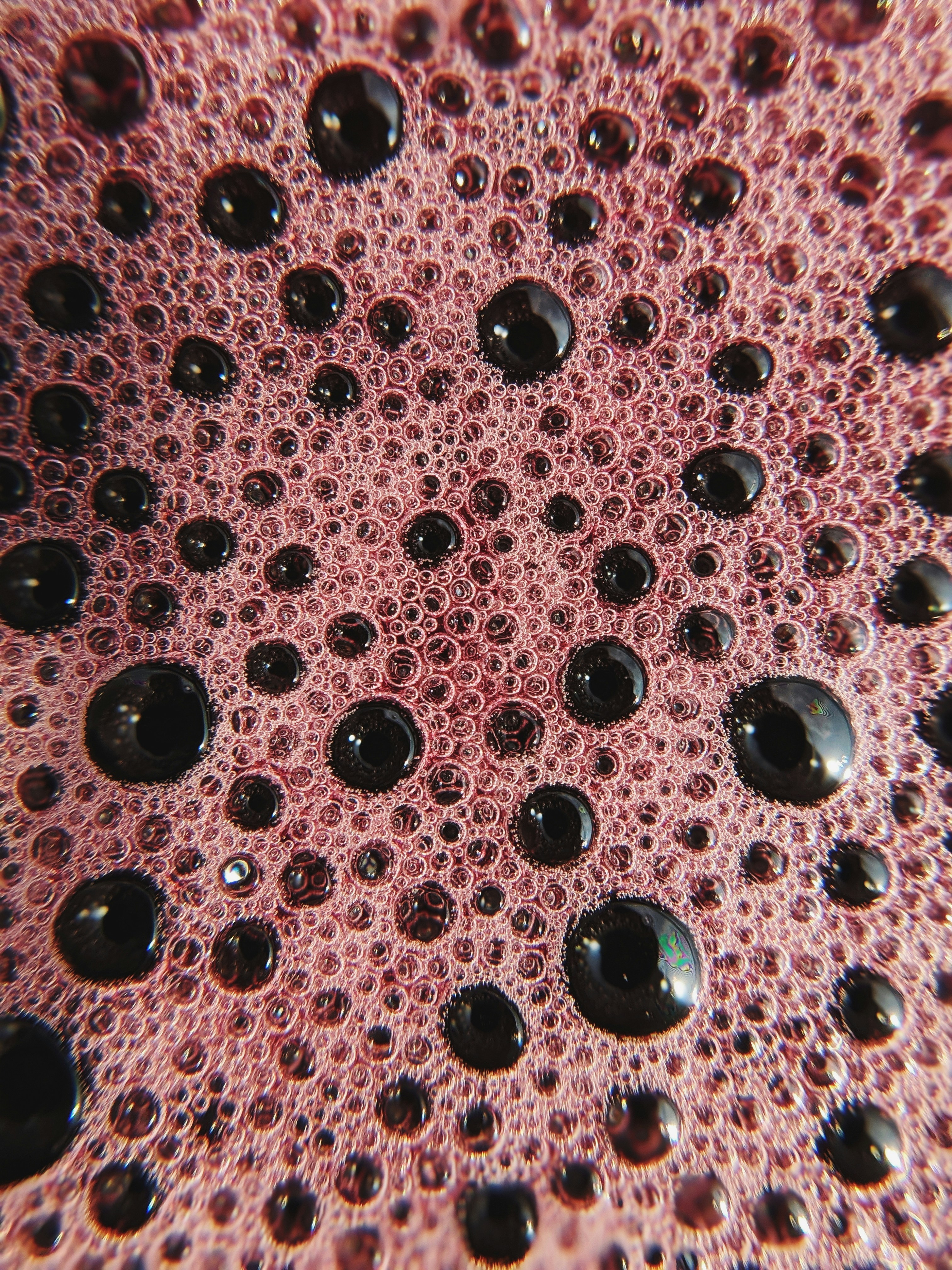
The principle is older than agriculture. Sourdough bakers save a portion of today's dough to start tomorrow's. Lambic brewers let their wort cool in open copper vessels called *koelschips*, catching the wild *Brettanomyces* and *Pediococcus* of Belgium's Senne Valley — organisms that exist in the wooden rafters, the ambient air, the particular microbial geography of a specific building in a specific town. Vinegar mothers — gelatinous mats of acetic acid bacteria — have been passed between households for centuries. Kombucha, sauerkraut, jun tea, kefir, yogurt: every fermented food tradition on earth is built on the same recognition. You don't start from scratch when the organisms you want are already working.
Mossto applies this to coffee. The established microbial community — past its lag phase, adapted to this particular cherry's sugars, this altitude, this farm — bypasses the uncertain first hours of spontaneous fermentation. Pre-acidifies the environment. Suppresses spoilage organisms, including the Enterobacteriaceae and mold germination that ruin conventional lots. Accelerates mucilage degradation. Over multiple generations of backslopping, it develops into something singular — a house culture. Site-specific. Unreplicable. As distinctive as a San Francisco bakery's century-old levain or the resident microflora in the rafters of a Belgian *gueuze* blendery.
The sourdough analogy is not decorative. It is structurally precise. A mossto culture maintained across harvest seasons develops its own terroir — not of the land but of the fermentation room. The geography of flavor migrates from the hillside to the tank.
No peer-reviewed study has been published on this process in coffee. Not one.
—
Edwin Norena is the kind of person who could fix that, and hasn't. An agroindustrial engineer with graduate training in biotechnology, he operates Finca Campo Hermoso in Circasia, Quindio — Colombia's coffee axis, where the Andes produce the kind of altitude gradients that make terroir legible to the naked eye. His protocols read like pharmaceutical batch records. Primary fermentation: 72 hours, sealed tanks, whole cherries. Depulping. Mossto harvest. Secondary fermentation: 96 hours, the pulped coffee backslopped with liquid from the primary stage. Sometimes — when the lot is destined for the kind of buyer who reads cupping notes like vineyard maps — he adds co-fermentation substrates. Galaxy hops. Dehydrated fruits. Fresh watermelon. Passion fruit. The resulting lot descriptions are compound nomenclature verging on incantation: "Double Carbonic Galaxy Hops Mossto Fermented Honey Gesha."
Norena calls mossto "a catalyst that helps to accelerate, control and enhance chemical reactions during coffee fermentation." The language is deliberately clinical. An activator with a known microbial population, not a flavoring agent, not a shortcut. He specifies using mossto from the same cultivar to maintain microbial consistency adapted to that cherry's sugar and acid profile. Gesha's lower mucilage volume produces restrained, floral mossto coffee. Pink Bourbon's higher sugar content yields intense fruit. The organism remembers the cherry it came from.
This distinction — between mossto and cherry juice — is the distinction between the method and a misconception. Fresh cherry juice is sugar water. Mossto is a 72-hour fermentation byproduct populated with established yeast and bacterial colonies, organic acids, ethanol, and metabolic compounds at a specific stage of microbial succession. When Norena explains this to green buyers, he is correcting an error that most specialty professionals still make without knowing it. The difference between adding juice and adding mossto is the difference between planting a seed and transplanting a forest.
—
The question of who invented it has no clean answer. Nobody minds.
Carlos and Felipe Arcila founded Cofinet in 2015 in Quindio, developing early protocols at Finca Jardines del Eden. Nestor Lasso's Finca El Diviso in Huila became a stop on the specialty importer pilgrimage circuit — one of those farms that appears in enough roaster origin stories to function as a shared reference point, the way Noma or elBulli does for fine dining. Norena formalized the technique with the precision of someone trained to think in microbial kinetics. Vergara arrived from the opposite direction — farm floor up, partnering with a regional lab rather than building one, learning the science to name what his instincts already suspected.
The mossto method was not invented. It was arrived at — simultaneously, across Colombia's specialty-producing regions, by a generation of producers with access to the same fermentation knowledge, the same economic pressures, and the same WhatsApp groups.
The WhatsApp groups are the actual story.
—
Colombian experimental coffee is, beneath the competition scores and $60 retail bags, a community of practice. Young producers — many of them children of conventional washed-coffee farmers — share protocols, exchange fermentation data, and visit each other's processing rooms with a frequency and openness that would be unrecognizable to the generation before them. The Federación model emphasized conformity. The experimental movement emphasizes circulation. Knowledge travels laterally, between farms, not vertically from research institutions or extension services. There is no textbook for mossto. No certificate program. No SCAA-approved curriculum. There are group chats, farm visits, and the radical informality of people building a shared technical vocabulary in real time.
Lohas Beans, a specialty importer, named a "holy trinity" of experimental Colombian producers — Vergara's Las Flores, Lasso's El Diviso, and the Gasca brothers' Zarza — that functions less as a ranking than as a map of influence. These farms are nodes in a network. Producers from across Huila, Quindio, Cauca, and Nariño cycle through them the way chefs stage at marquee kitchens — absorbing technique, adapting it, bringing it home. The innovation is not proprietary. It is ambient.
This makes the movement harder to romanticize in the ways the coffee industry prefers. It is not a lone genius story — no single inventor, no eureka moment, no patent. It is not a Silicon Valley disruption narrative — no venture capital, no pitch deck, no exit strategy. It is closer to what happens in open-source software communities or, if you prefer older analogies, in medieval craft guilds. Decentralized knowledge production with no formal governance and no official canon. The kind of collective innovation that traditional intellectual property frameworks don't know what to do with — and that traditional coffee journalism, calibrated to profile individual heroes, tends to flatten into a series of discrete origin stories.
—
The economics are not subtle.
Traditional washed Colombian coffee — the reliable, mild-bodied, FNC-approved product that built the country's global reputation — has spent the past decade failing to cover production costs. When the Federación itself began relaxing quality regulations it had enforced for generations, the signal was clear. Conventional washed processing is no longer a viable economic proposition for many of Colombia's 560,000 smallholder families. Experimentation is not rebellion. It is survival dressed up in cupping scores.
Mossto-processed lots from producers like Vergara retail from specialty roasters at $25 to $60 or more for a 150-to-250-gram bag — premiums that would have been structurally impossible for Colombian smallholders a decade ago. The demand is global but the growth is directional. China's coffee imports from Colombia grew 246% year-on-year by early 2024. Asian markets — with no sentimental attachment to what Colombian coffee historically tasted like and no cultural investment in the mild-bodied FNC identity — want bold, expressive, tropical flavor profiles. Mossto delivers them.
The backslopping technique itself requires no specialized equipment. Fermentation tanks with one-way valves. Careful management of liquids. The knowledge to identify when 72 hours of fermentation has produced an active culture rather than a spoiled one. This is what makes it — at least in theory — radically democratic. The infrastructure barrier is knowledge, not capital. A producer who understands microbial kinetics can build a house culture from nothing but her own harvest, her own tanks, and time.
In practice, the knowledge barrier is steeper than it looks. Vergara partners with a microbiology lab. Norena has graduate training in biotechnology. The Arcilas built Cofinet specifically to share technical knowledge among producers who couldn't access it alone. Without monitoring — without understanding pH, Brix, temperature, microbial population dynamics — backslopping can propagate undesirable organisms. Acetic acid bacteria produce vinegar notes. Wild yeasts generate phenolic off-flavors. Long-term backslopping without periodic culture resetting invites genetic drift, including bacteriophage activity that can collapse a microbial population overnight. The technique is simple. Executing it well requires the kind of applied microbiology that SENA teaches and most farming families never encounter.
The path between those two realities — the technique's radical accessibility and its practical knowledge demands — runs through exactly the kind of regional infrastructure that Colombia is building in real time. The Pitalito lab partnership model, where a local microbiology facility serves multiple farms, suggests one future. Cofinet's network model suggests another. Both are provisional, fragile, and entirely producer-led.
—
The flavors are unmistakable.
Norena's lots from Campo Hermoso are described as "highly botanical and ginger-like." His watermelon mossto carries tropical-fruit-and-candy characteristics that arrive in the cup with the force of something that has been built rather than found. The passion fruit mossto layers tropical intensity in a register closer to perfumery than agriculture. The Galaxy Hops Gesha — the one with the compound name — cups as lemongrass and horned melon, honey, jasmine, sage, and key lime. These are not traditional coffee descriptors. They are the vocabulary of cocktail menus and flavor houses and the kind of tasting event where someone hands you a spoon and explains what you're about to taste in language that assumes you already care.
Mossto-processed coffees share a family resemblance: explosive, layered complexity. Prominent botanical, tropical, and candy-like notes. Cleaner fermentation character than wild-fermented extended processes — less boozy, less "process-y," more articulate. The roasting window is tight. Conservative development, under 17% DTR, because the extended multi-stage fermentation loads the bean with volatile compounds and elevated sugars before the roaster touches it. Push too far and the structure collapses. The shelf life compresses. Degassing is rapid.
Competition judges have responded. The Cup of Excellence experimental category — introduced in October 2023, the organization's first rule change in 24 years — created a formal home for coffees like these. But mossto-processed lots occupy a gray zone even within the experimental framework. The addition of mossto from a previous batch technically introduces "foreign" biological material. Whether a house culture — grown from the same farm's own cherries, maintained across seasons, fed by the same soil and altitude — counts as foreign is a question that reveals more about the person answering it than about the coffee.
—
Diego Bermudez — whose thermal shock processing has already rewritten the price ceiling for Colombian specialty — represents a different version of the same revolution. His approach is industrial: bioreactors, proprietary yeast libraries, mass spectrometry, pressurized vessels reaching 20 psi. Norena and Vergara work at a different scale and with a different philosophy. Bermudez engineers flavor. Mossto producers cultivate it.
The distinction matters. Engineering implies control, repeatability, capital investment — the ability to produce identical batches across seasons, which is what competition baristas need and what importers paying $4,500 per pound expect. Cultivation implies patience, adaptation, site-specificity — the acceptance that a living culture will drift, evolve, respond to seasonal variation, cherry chemistry, ambient temperature, the particular microbial ecology of a particular fermentation room in a particular valley. The house culture is alive. That is simultaneously its limitation and its claim.
Both approaches share a refusal to accept that Colombia's coffee identity was settled. The FNC model — mild, clean, consistent, globally recognizable, economically insufficient — served volume exporters and institutional buyers for generations. The experimental generation is building something else entirely. Whether that something will hold — whether $60 bags and Chinese demand and competition infrastructure will sustain an entire generation of smallholder innovation, or whether the market will consolidate and extract value the way it always has — remains an open question. The producers are too busy fermenting to wait for the answer.
—
There is a concept in Japanese craft traditions — *ie* — that designates the household as an institution of knowledge transmission. The family workshop, the inherited kiln, the starter culture maintained across generations. The *ie* is not merely a family. It is a living archive of technique and biological material, passed from generation to generation — or, in the case of the *moyashi* spore houses that have supplied koji starters for six hundred years, from century to century.
Colombia's mossto producers would not use this language. But they are building the same thing. House cultures that encode the microbial history of a specific farm, a specific altitude, a specific family's sustained attention. Vergara's mossto carries the microbial signature of Las Flores at 1,780 meters in Huila. Norena's carries Campo Hermoso in Quindio. These cannot be replicated by purchasing equipment, hiring a consultant, or licensing a protocol. They can only be grown. Over time. With care. In a particular place.
This is what makes mossto the most quietly radical processing method in specialty coffee — and the least comfortable for an industry built on replicable procedures and scalable models. A house culture is not a protocol. It is not a recipe. It is a relationship between a farmer and a population of organisms that exists nowhere else on earth.
The science to explain it does not yet exist. The people who could fund that science are too busy buying the coffee. The people making it are too busy making it to wait for the study.
The culture, as always, is alive.